
Article · Plain speaking
The most misused phrase in aesthetic medicine.
There is no biological process called “collagen activation”. What is actually happening is slower, stranger and considerably more interesting.

I have been working in cosmetic medicine for close to twenty years. I did not start out of any great desire to use the standard injectables, the toxins and the fillers. I started because in 2007 a product rep asked whether I might consider learning to use her agent in men suffering from a condition called HIV lipoatrophy.
HIV lipoatrophy is one of the cruellest ironies in modern medicine, and almost everyone gets it wrong. It did not come from the virus. It came from the drugs that saved these men’s lives.
When combination antiretroviral therapy arrived in the mid-1990s it turned a death sentence into a manageable illness. Within a couple of years, though, doctors began noticing something else. Patients who were no longer dying were losing the fat from beneath their skin — from their arms and legs, and most visibly and most devastatingly from their faces. The cheeks, the temples, the eye sockets.
It took years to work out why. One class of the early drugs was damaging the tiny power plants inside fat cells. Starved of energy, the cells died. And facial fat, once it has gone, does not come back. Stopping the drug did not reverse it. These men and women had come through the epidemic, buried many of their friends, survived — and been handed a hollow, sunken face that announced their diagnosis to every stranger on the street.
What the rep told me was that their product, when laid into the face with needles or cannulas (that is another article, believe me), produced a slow but steady re-inflation of the facial structures by a process of “collagen activation”. She then mentioned, almost as an aside, that this agent was essentially the same molecule that makes up the dissolving internal stitches used millions of times a day in operating theatres around the world.
Well, that piqued my brain. So I went looking for where the idea had actually come from. Here is the simplified version of what I found.
The stitch that started it
For most of surgical history the materials available for repairing internal tissue — muscle, blood vessels, organs — were cotton, silk and catgut. Cotton and silk do not dissolve, and in some individuals the body simply rejects them. Catgut does dissolve, but it is a natural product and it breaks down enzymatically, which is to say unpredictably: sometimes too fast, sometimes with a good deal of inflammation.
The two World Wars made the cost of that unpredictability very plain. Injured men, saved by brave and brilliant surgeons working in appalling conditions, died seven to fourteen days after the operation that had rescued them, because the stitches gave way and the repair to crucial organs came apart. The wars did not produce the solution, but they made the need for one impossible to ignore.
The solution took another twenty years. The first synthetic dissolving suture reached surgeons in 1970. It broke down not by enzyme but by hydrolysis, which meant that for the first time it did so on a schedule you could predict. Others followed through the seventies and eighties, including the polymer that most cosmetic threads are made from today, which arrived in 1982.
And then, gradually, surgeons started noticing something. Not in one dramatic case, but across thousands of ordinary operations, and later across orthopaedic pins and bone screws made of the same family of material. Wherever these polymers had been placed and absorbed, the tissue around them had laid down collagen. The body had not simply cleared the material away. It had replaced it with firm connective tissue of its own making.
The pharmaceutical industry, no slouches, were quick to see the possibility. If that molecule builds collagen where you put it, you could inject it into a face. And they had a use case that was fast ramping up: HIV lipoatrophy.
And believe me, it worked. There were teething problems — the new collagen sometimes bundled into nodules, hard little lumps of tightly wound tissue — but a few nodules in a face that had gone from a wasted skull back to something structurally sound was life-changing for the people living with this.
So I started treating patients with HIV lipoatrophy, and I worked hard at finding a slow, steady way of rebuilding faces using the fat pads as guides. It was an excellent way of learning the anatomy of the face, and what constituted a natural result, because facial ageing is a factor of volume loss across bone, muscle, fat pad and skin. I tried different dilutions, going against the manufacturer’s own 2007 recommendation of a fairly concentrated mix, opting for a much thinner one. The results came slower. But they came without nodules, for the most part, and they looked natural and volumised, and it was satisfying and humbling to see the confidence it restored in my patients at that time.
Because I am a bit of a dick I will add that the higher dilution I settled on in 2007 has since been widely adopted by the very company that told me at the time that nodules were a matter of poor injection technique and nothing to do with the product or the concentration of particles in a specific dilution. Yeah, nice brah. Blame it on the injector.
Anywho, the point of all this rambling is that I went on to champion collagen activators like a lunatic. And there are many of them. Each has a specific mode of action and performs differently in the different planes of the face. Some can be used to build along bony margins, some instigate fat cell proliferation, some are safe to use in the delicate under-eye area, some are effective in multiple layers depending on dilution, and some are not.
I think it is fair to say I have used every product in the industry that falls under the banner of collagen activator. Every cosmetic injector has heard the term, and by now so has a fair slice of the general public.
And you may be as surprised as I was to learn that the term is not an entirely accurate description of what these products, or even we as injectors, are actually doing.
There is no biological process called collagen activation. The phrase collapses several genuinely different mechanisms into one marketing term, and the real mechanisms are more interesting, slower and considerably less predictable than the phrase suggests.
Now, in order to qualify this and avoid a barrage of curt emails from fellow injectors, please accept that this is not an article for scientists. It is written — probably terribly — for the ordinary person who wants to understand how this stuff actually works and how it might work for them. So.
Collagen
Collagen is a structural protein. It is the scaffolding of your skin. It is not activated. It is made, deposited, cross-linked (the chemical stitching that turns loose new collagen into strong mature collagen), broken down and replaced. “Activation” describes a shelf in a shop, not an event in your body.
Collagen is made by cells living in the dermis — the deeper layer of skin underneath the surface layer you can see and touch. Those cells are called fibroblasts, and what they do, and why they stop doing it, is the core of my argument.
Fibroblasts: what they do, and why they stop working
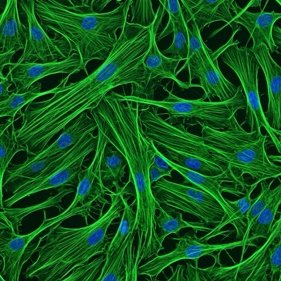
The story all of us were taught, and that has been repeated in training rooms and marketing decks for twenty years, is that skin sags because fibroblasts get old and lazy and stop making collagen.
A group of researchers at the University of Michigan — Fisher, Voorhees, Quan and colleagues — spent the better part of fifteen years quietly assembling the case for very nearly the opposite. Their work reframes how we should think about skin ageing, and almost nobody outside dermatology research has heard about it.
Fibroblasts do not get old and lazy. They respond to the physical environment they find themselves sitting in.
The cycle goes like this.
- In young skin, a fibroblast is anchored to intact collagen fibres. It spreads out and holds itself under tension against them, rather like a person holding the handles on a train. That stretched, anchored state is what keeps it productive.
- With time, and especially with sun exposure, an enzyme called MMP-1 (think of it as molecular scissors — the body’s own collagen-recycling tool, which becomes overactive with age and UV) begins chopping those collagen fibres into fragments.
- A fragmented scaffold gives the fibroblast less to hold onto. It loses its grip, shrinks and collapses in on itself.
- And a collapsed fibroblast makes less collagen and more of the scissoring enzyme that dismantles collagen, MMP-1.
Which, in turn, fragments more scaffold. Which collapses more cells. Round and round you go.
The conclusion that matters is this: the collagen shortfall in ageing skin comes mainly from the changed physical properties of a broken-down scaffold, not from worn-out cells.
The cells are not broken. Their environment is.
Which changes the question entirely. It is not how do we wake up a lazy cell. It is how do we give a collapsed fibroblast something to hold onto.
Four mechanisms bearing one name
Once you accept that framing, “collagen activation” stops being one thing and becomes at least four. And they are not variations on a theme. They are genuinely different.
1. Mechanical restoration
If the problem is that fibroblasts have collapsed because there is nothing to hold onto, then physically stretching them out again ought to restore their function.
And guess what. It does.
Researchers from the same Michigan group demonstrated new collagen production after injecting cross-linked hyaluronic acid — ordinary dermal filler — into sun-damaged skin. Not because of anything the material does chemically. Simply because it restored physical tension to collapsed cells. It gave the fibroblasts their handles back.
This is one of the most under-appreciated findings in aesthetic medicine. It means that a product most people think of as inert volume, as simply taking up space, is doing genuine biological work — and doing it by the least glamorous mechanism imaginable. It stretched a cell that needed to be stretched in order to wake up and work.
2. Controlled injury
Fractional lasers and other energy devices, needling, subcision (releasing tethered scars from underneath with a fine needle). You damage the tissue in a deliberate, controlled and fractional way, and the body runs its standard repair programme: inflammation, then building, then months of remodelling.
The body’s first-response collagen, type III, goes down quickly. It is gradually replaced by type I, the strong structural sort, over months. Fast to appear, slow to mean anything in terms of adding water-draw, elasticity and volume to the skin.
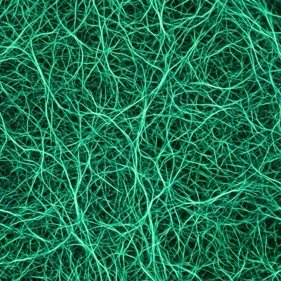
Collagen III — laid down fast
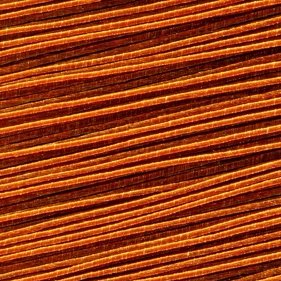
Collagen I — months to form
3. Foreign body response
This is the biostimulator category proper. A particle-based material is placed in the tissue, and because the body cannot simply ignore it, immune cells arrive to investigate, fibroblasts are switched on, and collagen is laid down around it.
The sequence is consistent and well documented. Immature type III collagen first, maturing towards type I over months. The inflammatory response settles between three and six months and is gone by twelve. The particles are cleared. The activated cells stand down.
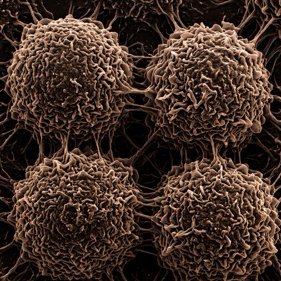
Macrophages — investigate, signal repair
Platelets — release growth factors
One of the biological pathways involved turns out to be a mechanical sensor — a protein that detects physical stretch. Which loops us straight back to the first mechanism. These categories are less separate than they look.
4. The thread hybrid: doing two jobs at once
And then there is the one nobody counts, because it is not sold as a collagen activator at all. It is sold as a lift.
Barbed dissolving threads are a collagen activator. Same class of molecule, same foreign-body response, same immature collagen maturing over months. On the biology, they belong in category three without argument.
But they are simultaneously doing something no other collagen activator attempts. They are physically holding tissue against gravity. A mechanical job and a biological job, in the same object, at the same time.
And the two jobs run on completely different clocks.
The mechanical clock is short. PDO, the material most threads are made from, loses its strength quickly. Roughly half of it within a month. Effectively all of it by four months. This is not controversial and never has been. It is printed on the manufacturer’s own surgical suture specifications, and has been for over forty years.
The biological clock is long. New collagen takes six to twelve months to organise and mature into something that can carry a load.
Put those two numbers side by side. The mechanical job of lifting the lower facial structure finishes long before the biological job starts delivering. There is a gap in the middle where the thread can no longer hold anything, and the collagen cannot hold anything yet.
I did not learn this from a paper. I learned it from patients.
The threads doing the heavy lifting of the cheeks and lower jaw slip or break at twelve to sixteen weeks. Consistently. You see the tissue come down, and the patient sees it too, and they are usually eight or nine months short of the timeframe they were quoted. So I changed how I work: fewer threads, and a repeat procedure at ten to twelve weeks to support the ones already in place, so that they are given time to convert to collagen rather than break and drop the face.
That is not how threads are positioned by manufacturers or their trainers. They conflate longevity with how long the thread takes to be fully absorbed, which is twelve to eighteen months, rather than how long it takes to lose its integrity and break, leaving the tissue they were lifting in a familiar sag. Those are two entirely different numbers, and only one of them is the one the patient experiences.
Patients want the lift held for twelve months or more. The only way to achieve that is to understand what actually happens to a thread once it is inside the face. That deserves an article of its own, which I will bore you with in due course.
The observation to sit with is this. These four mechanisms have different timelines, different reliability, different ways of failing and different degrees of reversibility. Calling all four “collagen activation” is exactly how people end up with the wrong expectations about the wrong treatment.
What the phrase conceals
Four things, and they happen to be the four things a patient most needs to know.
Time
Building and maturing collagen takes months. Any promise of collagen in a fortnight is describing something else, and that something else is usually swelling. This matters more than it sounds, because it means the day you look best is often not the day the treatment has worked. It is the day you are most swollen.
Variability
The response between individuals is genuinely unpredictable. The scientific literature is candid about this in a way that clinics almost never are. Two women of the same age, the same skin type, the same treatment by the same hands, will not get the same result — and nobody can currently tell you in advance which one you are going to be.
Evidence
The comparative evidence is messier than anyone lets on. One animal study found more of the good structural type I collagen from simply releasing the tissue with a needle than from injecting a biostimulator into it. A single small study in animals, and I would not build a practice on it. But it is published, it is inconvenient, and I have never once seen it in a training deck.
Ceiling
And this is the one I care about most, because I learned it the hard way, in faces that had almost nothing left to build on.
Every collagen activator yields varying results, and every one of them has a ceiling. In a face that has lost significant bony structure with age, the ability to build volume takes longer and yields less spectacular results. There is a limit to what new collagen can do, and no amount of product changes where that limit sits.
That does not mean it is not worth doing. It means the work is not about the product at all. It is about looking honestly at where the loss has actually occurred — skin, fat, or bone — matching the right agent to the right layer, and going conservatively over a longer period than anybody would like.
Which brings us back to the four mechanisms. They are not interchangeable, because the tissues they act on are not interchangeable. Choosing between them is most of the job, and it is the part that no brochure has ever described.
So what the term should actually mean
Used honestly, “collagen activation” would be a heading rather than an explanation. The name of a shelf with four quite different things sitting on it.
I do not expect it to go away. It is too useful to too many people. And to be fair to my colleagues, most of us adopted it in good faith, because it is what we were taught. I certainly did, and I championed it harder than most.
But I think a patient is entitled to more than a shelf label. If someone offers you collagen activation, three questions will tell you more than any brochure.
The short version
The argument above, in ten frames. Swipe or use the arrows.
Aesthetic medicine
There is no biological process called collagen activation.

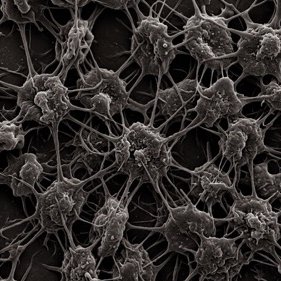
This portrait is built entirely from images of cells. So is the argument.
The phrase
It describes a shelf in a shop, not an event in your body.
Collagen is not activated. It is made, deposited, cross-linked, broken down and replaced. “Activation” collapses four genuinely different mechanisms into one marketing word.
The cell
We were taught that skin sags because fibroblasts get old and lazy.
The mechanism
A fibroblast holds onto collagen like a commuter holding a handle on a train.
Stretched and anchored is what keeps it productive. Time and sun fragment the scaffold. The cell loses its grip, collapses, and then makes less collagen and more of the enzyme that destroys collagen. Which fragments more scaffold. Round and round you go.
The cells are not broken.
Their environment is.
So the question is not how do we wake up a lazy cell. It is how do we give a collapsed fibroblast something to hold onto.
Four mechanisms, one name
Not variations on a theme. Genuinely different.
- 1Mechanical restoration — stretching collapsed cells
- 2Controlled injury — lasers, needling, subcision
- 3Foreign body response — the biostimulators
- 4Threads — doing a mechanical and a biological job at once
The gap nobody mentions
The two jobs run on completely different clocks.
A thread loses roughly half its strength within a month and effectively all of it by four. New collagen takes six to twelve months to mature into something that can carry a load. There is a gap in the middle where the thread can no longer hold anything, and the collagen cannot hold anything yet.
The timeline
Type III arrives fast. Type I takes months.
Collagen III
Collagen I
Any promise of collagen in a fortnight is describing something else, and that something else is usually swelling. The day you look best is often not the day the treatment worked.
Three questions
If someone offers you collagen activation, ask:
- 1Which mechanism does it actually use?
- 2Over what timeline — when is the collagen actually there?
- 3On what evidence, and in whom?
If the answer to any of those three is a brand name, ask again.
1 / 10
This is an educational article, not a treatment recommendation. The risks that apply to cosmetic procedures are set out on the risks and recovery page, and every option begins with an in-person consultation. Related reading: Perimenopause: the switch, not the slope · Understanding facial volume loss · How to think about choosing a cosmetic injector.